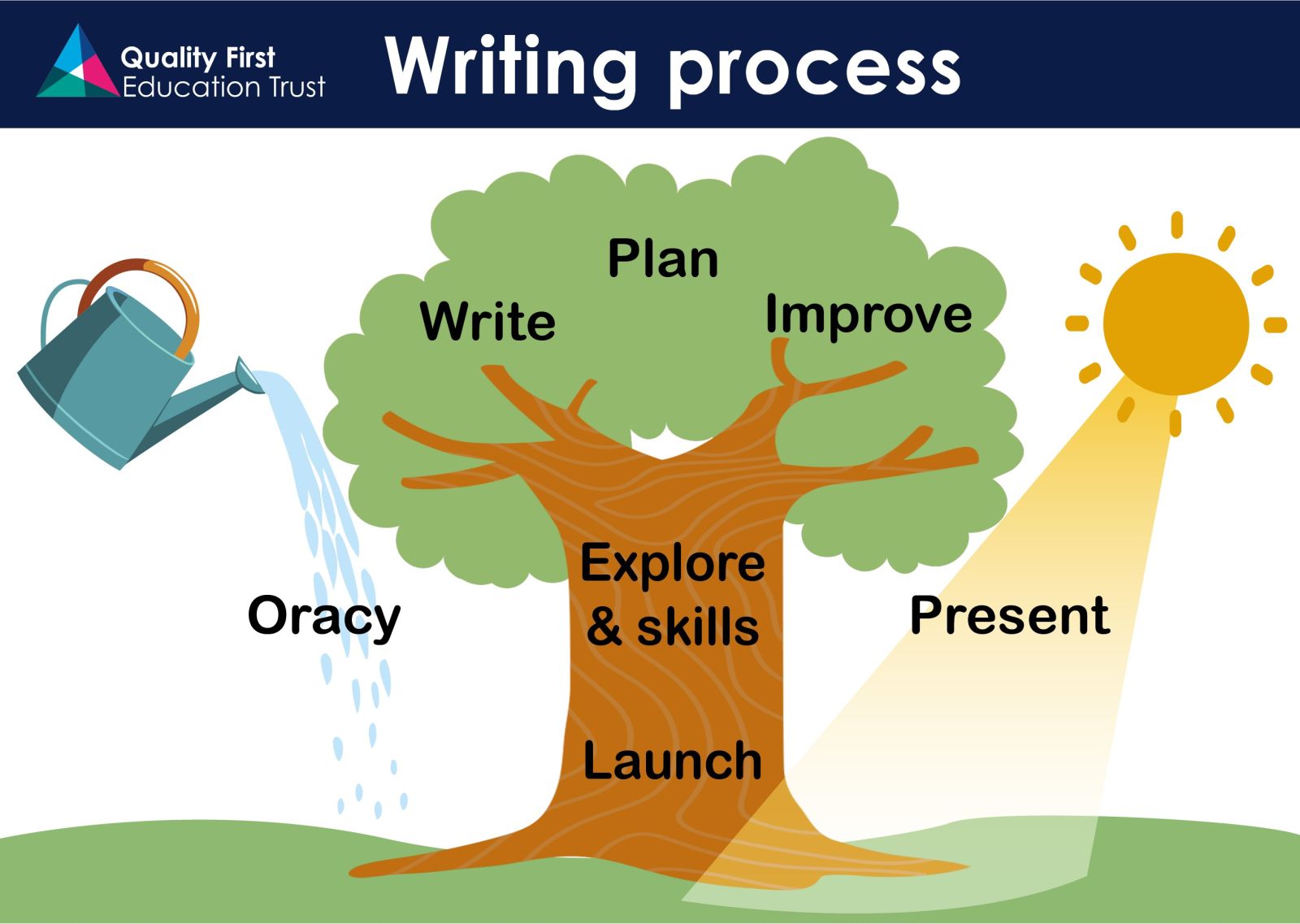
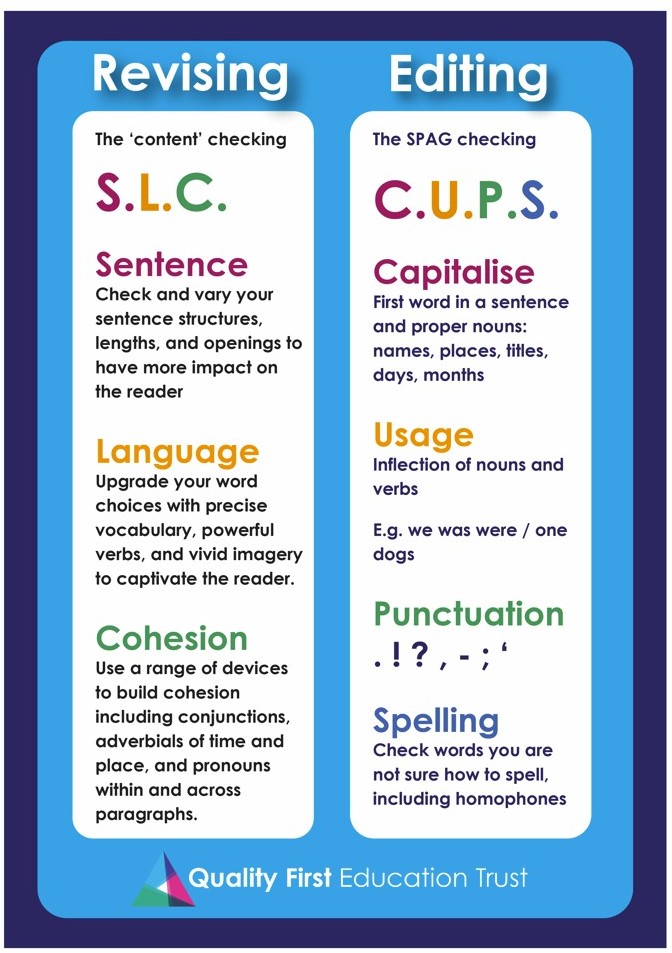
At Q1E, we teach writing in a systematic way
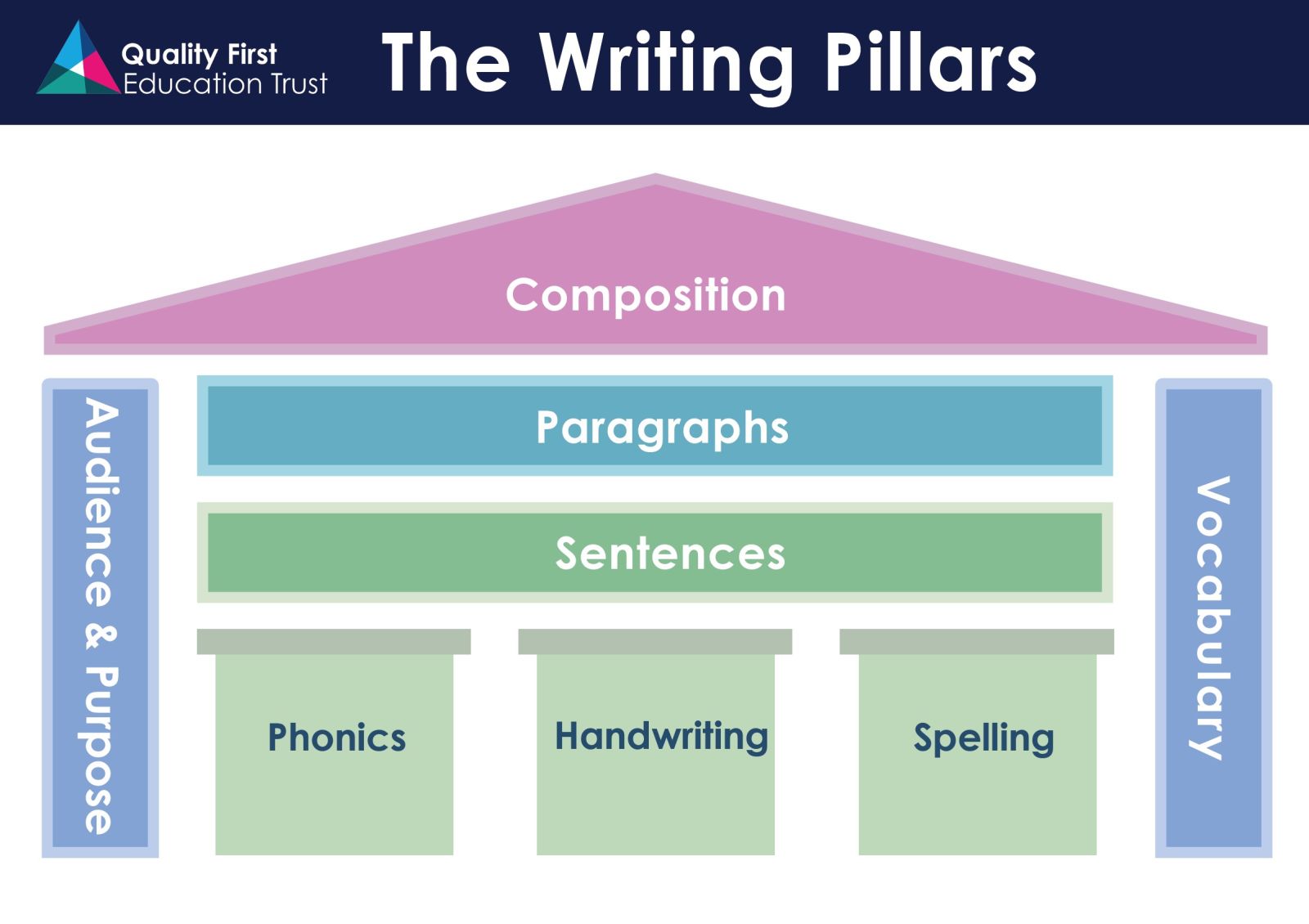
Phonics
We explicitly teach phonics (segmenting) every day in Reception and Year 1. We teach children how to write phonetic sentences with the sounds they have been taught in our systematic Q1E Trust phonics approach
In Reception, phonics lessons are the primary vehicle for writing, where children write about simple images to keep cognitive load low.
Handwriting
.png) We explicitly teach transcription (spelling and handwriting skills) every week across all year groups.
We explicitly teach transcription (spelling and handwriting skills) every week across all year groups.
Research shows that children do not reach full handwriting maturity until approximately 14 years old; so regular and structured practice throughout primary school is vital.
When letter formation becomes automatic, the brain can redirect its energy away from the physical mechanics of writing and toward choosing rich vocabulary and content.
Progression Overview: Reception to Year 6
Spelling
We explicitly teach transcription (spelling and handwriting skills) every week across all year groups.
We explicitly teach spelling to enable pupils to become fluent spellers, which promotes fluency and confidence in both their reading and writing while also reducing the cognitive load when working on other aspects of the writing process.
In Year 2, pupils move from phonics to Ready Steady Spell (by Literacy Counts), an impact-proven, research-informed programme. Through consistent routines and spaced retrieval reviews, spelling rules are successfully moved into children’s long-term memory.
Progression Overviews: Year 2, Year 3, Year 4, Year 5, Year 6.
Sentence Structure
We explicitly teach sentence structure.
If writing is building a house, then sentence structure - subject (noun) and action (verb) – are the bricks.
If writing is building a house, then grammar and syntax are the building regulations.
Children need to be taught how to use these correctly, so we dedicate time to practising these things – first for accuracy and then for variation and effect.
Progression Overviews: EYFS, Year 1, Year 2, Year 3, Year 4, Year 5, Year 6
Paragraphs
We explicitly teach children how to plan and write paragraphs because this is the skill that turns a series of sentences into a properly structured piece of writing. It is also the skill that is often missed out in explicit teaching. We teach children how to plan paragraphs in both narrative and non-narrative writing, and children are given lots of opportunities to revise and re-draft their paragraphs.
Composition
This is the skill of children putting together the constituent parts of writing that they have been taught and have practised, into a complete piece of writing. Successful writing composition requires a clear understanding of audience and purpose.
_edited.jpg)
We ensure children think about who will read what they have written and the effect they want it to have. Do they want it to: inspire, entertain, inform, explain, instruct, persuade, reflect or clarify thinking.
We develop the children’s composition skills through:
- exploration of high-quality texts and models
- understanding of audience and purpose
- high emphasis on vocabulary
- clear progression of sentence structure skills
- the development of children as writers, evaluators and editors
- understanding features of text types
- practice and experimentation with grammatical structures
- ensuring their writing reaches its audience.